Why Your Energy Bill Is a National Security Problem
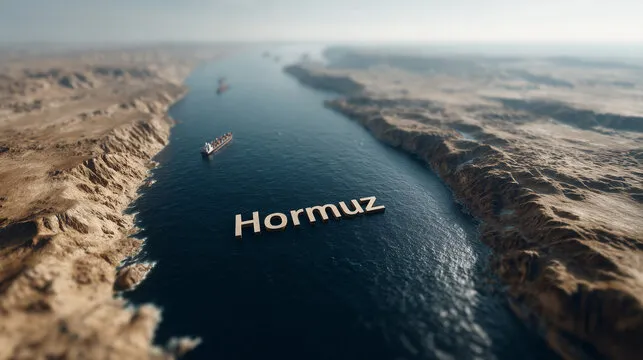
Iran closes the Strait of Hormuz and suddenly everything costs more. Your groceries, your heating, your commute. One narrow waterway on the other side of the world, and your life gets more expensive overnight.
This keeps happening. And every time it does, the same people who called the energy transition "too expensive" go quiet for a bit.
Let's talk about what's actually going on.
The Hormuz problem
About 20% of the world's oil passes through the Strait of Hormuz every single day. That's roughly 20 million barrels. When Iran decides to flex, they don't need to fire a single shot. They just need to threaten to close it. Oil futures spike, gas prices follow, and the whole global economy flinches.
This isn't new. It happened in the 80s, it happened in 2019, and it's happening again now. The playbook hasn't changed because the dependency hasn't changed.
Europe imports about 95% of its oil. Ninety-five percent. Every time there's a crisis in the Gulf, European consumers and businesses eat the cost. We have essentially outsourced our economic stability to some of the most volatile regions on the planet and then act surprised when it blows up.
"But renewables are expensive"
Are they though? Compared to what?
The average European household has seen energy bills double or triple since 2021. That wasn't because someone built too many wind turbines. That was because we are chained to a global fossil fuel market that we do not control.
Here's the thing people miss about renewable energy. It's not just solar panels on rooftops. It's an entire ecosystem of technologies that, once built, runs on inputs nobody can embargo.
Wind is already generating over 17% of Europe's electricity. Offshore wind farms in the North Sea are producing power at scale, and the fuel cost is literally zero. Denmark gets nearly 60% of its electricity from wind alone. Nobody is threatening to blockade Danish air currents.
Solar is now the cheapest form of electricity generation in history. Not in some lab, not in theory. In actual deployment, at scale, right now. Southern Europe is sitting on a goldmine of solar potential that could power the entire continent.
Hydropower has been quietly doing its thing for decades. Norway runs almost entirely on it, getting about 90% of its electricity from water. It's reliable, it's proven, and it doubles as energy storage.
Green hydrogen is where things get really interesting. You take excess wind and solar energy, use it to split water, and you get hydrogen. That hydrogen can power heavy industry, fuel ships, heat buildings, and store energy for when the wind doesn't blow and the sun doesn't shine. It closes the gap that critics love to point out.
Geothermal energy in Iceland and increasingly in the Netherlands and Germany gives you constant baseload power from the heat under your feet. No fuel imports. No supply chains to disrupt.
Battery storage has dropped over 90% in cost since 2010. Grid-scale batteries are being deployed across Europe right now, solving the intermittency problem that used to be the go-to argument against renewables.
The "too expensive" argument was always a comparison against artificially cheap fossil fuels that never priced in the risk of exactly what's happening right now.
The defence angle
Here's something that doesn't get talked about enough. Energy dependence is a defence problem.
NATO countries spend billions on military readiness. The alliance just raised its spending target to 3.5% of GDP by 2035, up from the old 2% floor that most members only recently started hitting. We run exercises, we buy equipment, we train troops. All to make sure we can defend ourselves if things go sideways. But we leave our single biggest strategic vulnerability completely exposed: energy supply.
Think about what happens during a real crisis. Fuel supply lines get disrupted. Oil tankers get rerouted or blocked. Gas pipelines get shut off (ask Germany how that felt in 2022). A military that depends on imported fuel is a military with a massive weakness. Bases powered by local wind and solar? That's resilience. Military vehicles running on domestically produced green hydrogen? That's strategic autonomy.
A country that runs on its own renewable energy mix is a country that can't be blackmailed with oil prices. It's a country whose economy doesn't crash every time someone rattles a sabre in the Persian Gulf. It's a country that can actually sustain itself in a crisis instead of scrambling.
The irony is wild. We keep raising defence budgets but won't invest in the one thing that would make us genuinely harder to coerce.
What this means for you
Every wind turbine that goes up is a small piece of energy independence. Every heat pump replacing a gas boiler is one less household exposed to whatever happens in the Gulf next month. Every EV on the road is one less driver who has to care about OPEC meetings. Every home battery is a buffer against the next price shock.
This isn't about being an environmentalist. You don't have to hug a tree or glue yourself to a road. This is about basic common sense. Do you want your cost of living to be determined by geopolitical crises you have zero control over? Or do you want your country to generate its own power from sources that nobody can cut off?
The sun is free. The wind is free. The heat under our feet is free. The technology to capture all of it exists today and it's getting cheaper every year.
The only thing that's expensive is pretending we can keep going like this.